Let's improve public transport! Welcome to the presentation of our research groups.
Periodic timetable
Since the end of the last century, a group of transport enthusiasts has been operating at the CTU FTS. We strive to maintain a traditionally high share of public transport passengers and a traditionally high evaluation of public transport quality in the Czech Republic compared to other EU countries. The basic tool for the competitiveness of public transport against increasingly available individual transport is temporal and spatial availability. So the key lies on the side of an attractive offer of services. However, with limited resources, it is obviously not possible to drive often enough directly everywhere. For the basic offer of transport services in the area, it is therefore appropriate to design a well-thought-out network of lines (for different transport purposes, different service layers and different transport flows) and apply the principles of periodic timetable with systematic connections in nodes in its operation.
In cooperation with the Ministry of Transport of the Czech Republic and Czech Railways, this concept, which has proved successful especially in German-speaking countries, has gradually succeeded in long-distance transport in the Czech Republic. Subsequently, many regions took it for granted, and the focus of our work shifted to regional, suburban and urban transport. The capacity limits of the current rail infrastructure then caused the need to address freight transport in accordance with the priorities of the govermental transport policy. For the further development of this concept, it is necessary not only to work with the service offer (timetable) independently, but also to plan it together with new vehicles, proposals for modifications and completion of the infrastructure and the methodology of traffic management on it.
We currently offer four attractive research groups specializing in public and combined transport, rail technology, urban mobility, and, last but not least, groups focused on aspects of traffic behavior and demand modeling in collaboration with the Charles University in Prague. Now you have the opportunity to join in and solve public transport problems together, for example where you know it well!
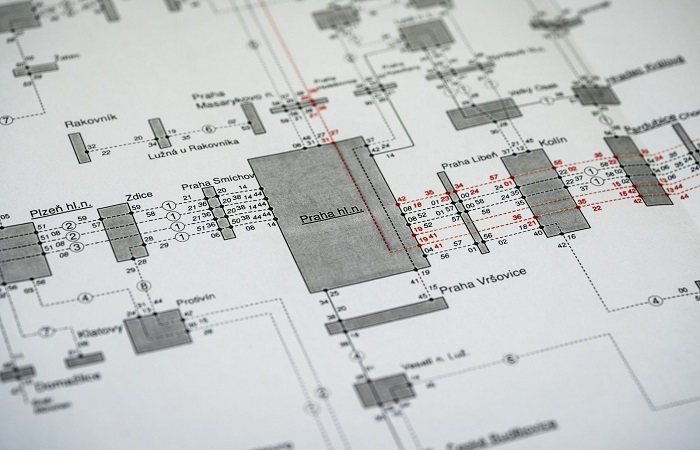
Research group 17X1IG:
Integral periodic timetable in the Czech Republic
Compared to individual transport, public transport lacks temporal and spatial accessibility for individual. In a developed area, however, it can offer a clever network of transfer links between lines (and traffic modes) at regular intervals - a periodic timetable. The aim of The group is the concept of a hierarchical offer of functional layers of public service with backbone in rail transport - from the modeling of transport relationships through modal split to the creation of timetables and operatinal technology, including long-term optimization of timetables, network of lines, vehicle rostering, infrastructure and dispatching.
Research group 17X1KC:
Competitive public transport
Bus, urban and rail transport is usually ordered and paid for in terms of performance (per mileage), although most costs are fixed (per vehicle, drivers in shift, etc.). The aim of The group is to learn to use the available resources from improving the offer of links to the preparation of comprehensive documents for competition for carrier selection. We are mainly concerned with macroscopic transport modeling and design of public transport timetables.
Research group 17X1RN/TN:
Development / Technology of rail freight transport
Most of the railway network was created thanks to freight transport. However, it now faces both competition from road transport and insufficient track capacity on many backbone lines intensively used by passenger transport. In the Czech Republic, the market on the part of carriers is fully liberalized and the transfer of transport back to the railways is a strategic goal of the EU and the state, even though current construction projects do not take this very much into account.
How to obtain attractive and flexible routes for freight trains without restricting periodic timetabled passenger transport - long-distance and suburban - and filling freight trains into "holes" in tact? Yes, it's feasible in a better way!
Research group 17X1RG:
Regional mobility support
The research group focuses on individual modes of transport - their specific applications, current trends and interconnections between them. We get acquainted with the concept of mobility as a service, show the strengths of public transport and look for suitable solutions to ensure transport on the "last mile".
Last diploma and bachelor theses
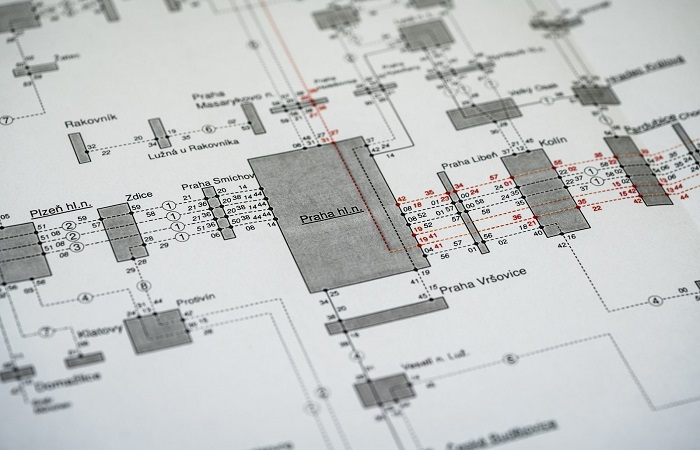
Railway transport concept for the route Prague - Benešov following the construction of a new line
Rychetský, Adam; Bachelor theses; 2026
This thesis deals with the design of a new operational concept for passenger rail transport for the route Prague - Benešov with regard to the planned construction of a double-track railway line between Prague and Bystřice. After completion, this new line will significantly reduce travel times, particularly for long-distance rail services, but also for regional services operated between Prague and the Benešov region. The transfer of long-distance services to the new line will free up a substantial part of track capacity on the existing railway line 221 between Prague and Benešov, allowing the current operational concept to be redesigned into a zonal timetable based one.
The thesis begins with an analysis of transport relations within the addressed area, followed by a detailed description of the railway infrastructure on which the proposed concept is based. The operational concept is designed with respect to the technological constraints of railway operations and the limitations of the infrastructure. The resulting proposal is presented in the form of a detailed network diagram. Finally, the proposed concept is evaluated from both
operational and transport perspectives, and its possible future modifications and extensions are discussed.
Implementation of the Capacity Regulation and its impact on railway infrastructure capacity allocation
Čech Ondřej; Bachelor theses; 2026
This bachelor thesis examines the new capacity regulation and its implementation. The first part of the thesis presents the current system of allocation of railway infrastructure capacity, the sources on which this system is based, and summarizes its strengths and weaknesses. The second part analyzes the capacity regulation itself and summarizes the key principles and procedures it introduces. Special emphasis is placed on the issue of temporary capacity restrictions. Last but not least, this part of the thesis attempts to identify the risks associated with the implementation of the capacity regulation. Based on the findings, the third part of the thesis attempts to create a model of allocation of railway infrastructure capacity on a selected section of the Czech railway network.
Proposal of the timetable for the railway line Plzeň - Domažlice during the individual phases of track reconstruction
Cíza Petr; Bachelor theses; 2026
This thesis deals with the design of a timetable for the railway line Plzeň Domažlice Furth im Wald following the completion of individual construction projects carried out as part of its modernisation. The thesis includes an analysis of the current state of railway transport, including the plans of the transport authorities for future operation. The theoretical part describes the individual planned construction projects and their impact on future railway operations. Subsequently, timetable proposals for the individual stages of the modernisation are developed using the FBS iPlan software. The final part evaluates the proposed timetables and identifies their main benefits as well as their shortcomings.
Analysis of the Prague-Frankfurt rail connection from the perspective of a rail carrier
Kolář Jan; Bachelor theses; 2026
This thesis deals with the possibilities of introducing a direct international longdistance railway service between Prague and Frankfurt from the perspective of a railway operator. The thesis compares two possible routes: the northern route via Dresden, Leipzig, Erfurt and Fulda, and the southern route via Plzeň, Domažlice, Nürnberg and Würzburg. For both variants, an approximate travel time on the existing infrastructure is determined, followed by an assessment of the impact of planned infrastructure projects on its gradual reduction. The results show that the northern route is more suitable for the main fast connection, as it achieves shorter travel times in all assessed scenarios. In the final considered state, the travel time on the northern route could decrease to approximately 4 hours and 17 minutes. The thesis also includes a framework definition of suitable vehicle parameters, particularly in terms of power supply systems, train control system and maximum speed.
Feasibility of battery-powered train operations between Benešov u Prahy and Vlašim
Michalec, Martin; Bachelor theses; 2026
This thesis focuses on evaluating the feasibility of deploying battery electric vehicles on railway line 222 under passenger line S99. First, the current state of both the infrastructure and operations is evaluated. The operational technology of conventional and battery-powered passenger vehicles is then described. Furthermore, the thesis proposes several operational variants of battery vehicles on the line and assesses the necessary measures required to enable such operations. Finally, the individual operational variants are evaluated from both an economic and operational perspective.
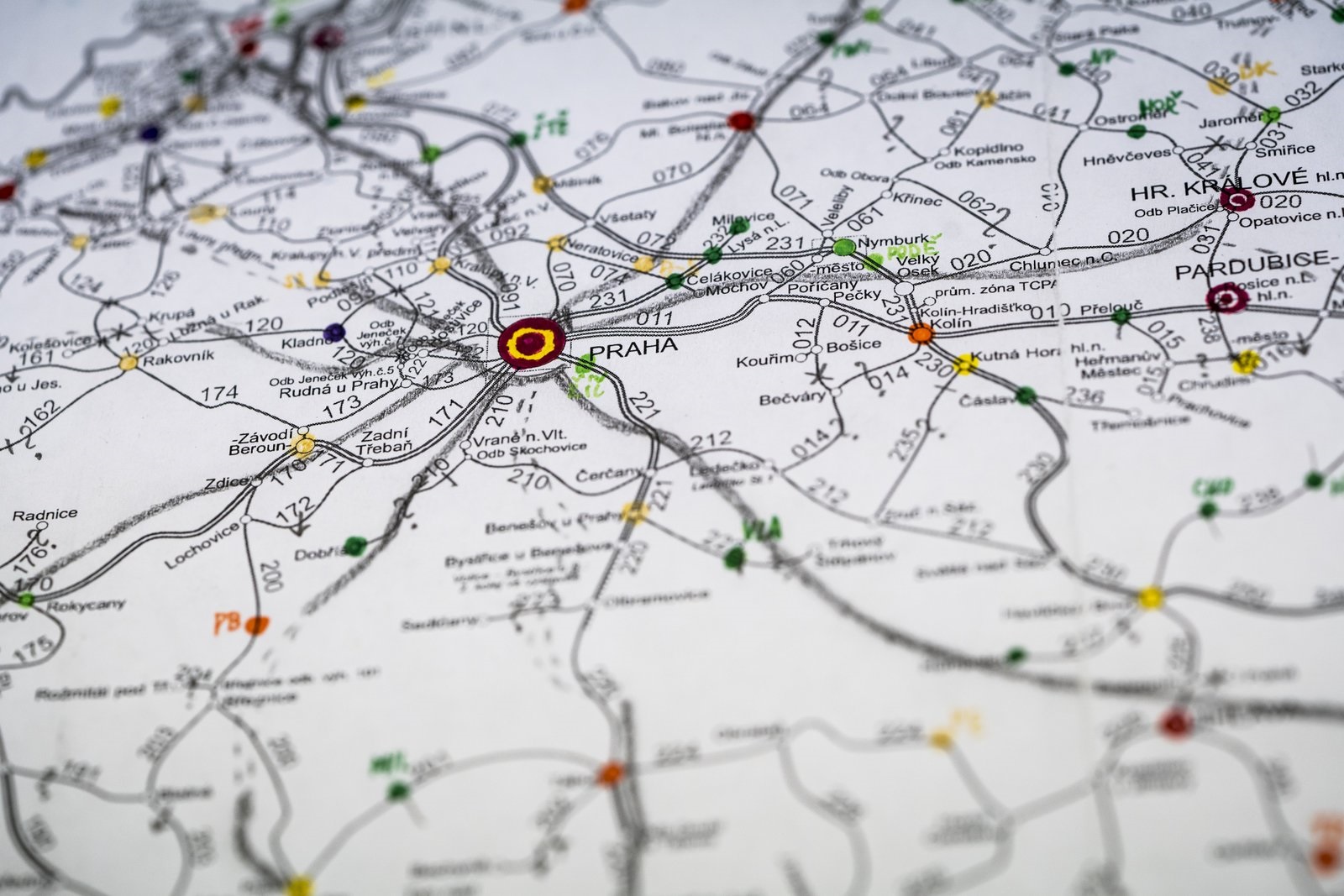
Cost analysis in freight rail transport
Hajný Jan; Bachelor theses; 2026
The thesis deals with the analysis of the impacts of implementing the TTR (Timetabling and Capacity Redesign) methodology on a selected railway line. The work includes an analysis of the demand for railway capacity on the chosen line, the design of a capacity model, and the application of TTR principles in the timetable planning process. The outcome is an evaluation of the impact of this methodology on traffic organization and the utilization of railway capacity.
Analysis of the impacts of implementing the TTR methodology on selected railway line
Janovský Ondřej; Bachelor theses; 2026
This thesis analyzes operating costs in rail freight transport, focusing specifically on traction electricity consumption and infrastructure capacity charges. On a theoretical level, it outlines the operator's cost structure, the hybrid energy billing model, and the infrastructure charging framework for the year 2026. Based on energetic simulations in the FBS iPlan software and actual operational data from ČD Cargo and DB Cargo, an economic comparison of seamless operations and forced train stops on routes between Prague and Brno is presented, alongside a proposed compensation model to incentivize the utilization of alternative lines.

Dividing Train Technology
Chramostová Kateřina; Bachelor theses; 2026
This thesis deals with the dividing train technology. It defines it as a term and focuses on the description of the factors, which influence the implementation of this technology, and it also investigates its advantages and disadvantages. Furthermore, it describes the usage of this technology in the Czech Republic, Germany, Austria and Switzerland and compares the ways of informing about portion working in those countries. The outcome of this thesis are proposals of implementing the portion working at three locations in the Czech Republic (Planá u Mariánských Lázní, Kralupy nad Vltavou, Otrokovice).
Opportunities for Long-Distance Bus Transport under PSO in Czechia
Macura Sebastian; Diploma theses; 2026
This thesis addresses the absence of guaranteed long-distance bus transport operating under a public service obligation in the Czech Republic. The objective is to identify transport relations lacking competitive railway infrastructure and to propose the implementation of backbone bus routes on them. The potential assessment is conducted using macroscopic transport modelling in PTV VISUM software, utilizing data from OSRM and TomTom APIs, alongside a gravity model of demand. The competitiveness of the hypothetical bus supply against the prospective 2030 railway network is primarily evaluated through savings in perceived journey time. The analysis identifies over 4,000 perspective relations, establishing the foundation for a detailed network operational concept. This concept outlines six priority routes strictly adhering to the principles of an integrated regular-interval timetable. Subsequent verification within the transport model confirms that implementing these connections effectively increases the modal split in favor of public transport.
Even better research groups than you expected!